Category: Metropolitan Museum

  • The feminist concept of the “male gaze”

    The feminist concept of the “male gaze”

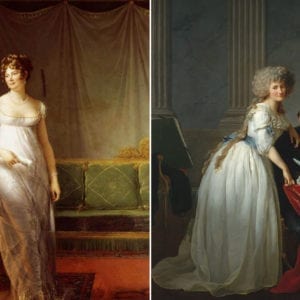
    The feminist concept of the “male gaze” is useful in art criticism. The concept originally comes from film studies, where it is used to discuss the fact that men traditionally controlled the camera, of which women were an object. Men certainly also controlled the brush through most of the history of Western painting, and the women in paintings generally acknowledge this. As the art historian John Berger said, women in painting don’t usually look out at the viewer: they aren’t considering the viewer, but considering how the viewer sees them. They have an inward gaze, rather than an outward gaze. But painters can also violate this “rule” (more a tendency really) to depict a woman who has power or confidence.

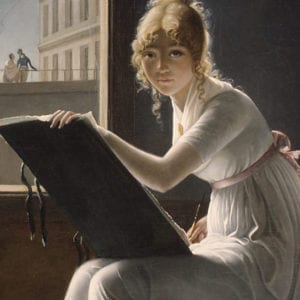
    Two paintings that are diagonally across from each other at the Metropolitan Museum make this clear. On the one hand, we have Gérard’s portrait of the Princess of Talleyrand, a courtesan who became Talleyrand’s mistress and then his wife. She was considered very beautiful in her time and is dressed in the latest Empire fashions, and she looks down and to the side in her portrait. Her gaze avoids the viewer’s: she is absorbed in her own thoughts, or her own coquetry, it’s unclear which. Across the gallery is David’s double portrait of the great scientist Lavoisier and his wife, Marie-Anne Paulze. Here the male inside the painting definitely does not control the gaze: he looks up at his wife questioningly, while she does not return his gaze (though she puts her hand on his shoulder with a gesture of intimacy unusual in painting). Instead she turns to look out directly and confidently (though not aggressively) at the viewer: it is she who communicates with the world on behalf of this couple. And in fact this portrays something real about this couple. Paulze had many public-facing characteristics that Lavoisier lacked: she spoke many languages and could inform Lavoisier about the scientific literature of the whole of Europe. And she was also his lab illustrator, explaining his/their experiments to the world through the visual arts. Look at the women you see in the art museum the next time you go. Do they look out at the viewer, or not, and why?

    https://www.facebook.com/events/724999504353889

  • Shady Ladies Featured In O, The Oprah Magazine!

    Shady Ladies Featured In O, The Oprah Magazine!

    We are so grateful for being included on the ‘Gratitude Meter5 Things We’re Smiling About in this month’s issue of O, The Oprah Magazine! When it comes to Shady Ladies Tours, Oprah exemplifies the kind of ambitious, glass ceiling breaking woman that our tours are all about! (more…)

  • Shady Ladies tour or Nasty Women?

    Shady Ladies tour or Nasty Women?

    People often ask me what the difference is between the Shady Ladies tour and the Nasty Women tour—whether the themes are really different, whether in short they should go on both tours or only one. In fact, the difference between the two tours is very clear, and there is almost no overlap between them. The Shady Ladies tour is about royal mistresses and courtesans, fascinating categories of women that were prominent in cultures distant from our own—and which are major themes in the art of all those cultures, from ancient Greece to Edo-period Japan to Renaissance Italy to Belle Epoque France. The Nasty Women, instead, is about feisty, path-breaking women—women who had more power and/or independence than we usually think women in the past had. (more…)

  • The Five Most Powerful Women in the Metropolitan Museum

    The Five Most Powerful Women in the Metropolitan Museum

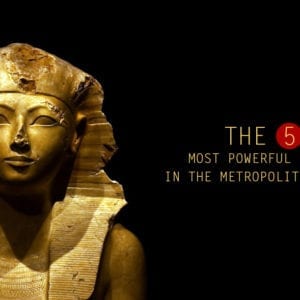
    My esteemed colleague Mary Beard has posted an article about the five most powerful women in the British Museum, as a celebration of Women’s History Month.  So since we are now doing a tour about that topic at the Metropolitan Museum, I thought I should answer with a post about the most powerful women in the Met.  Because the Met actually has a lot of powerful women, from the most powerful woman pharaoh of ancient Egypt through women of the 20th century.  And this year of all years, now is the time for some women’s history!

    (more…)

  • “Nasty Women” are Everywhere—even the Metropolitan

    “Nasty Women” are Everywhere—even the Metropolitan

    We know them from work, family, public and private life—women who speak their mind, pursue their careers and even run for public office. They’re smart. They’re sassy. Some people call them “nasty.”  But we say they’re strong. And to celebrate them (and Women’s History Month) Shady Ladies Tours is launching a brand new offering: Nasty Women of the Metropolitan. (more…)

  • The bed of one of the great courtesans of 19th century Paris, Valtesse de la Bigne.

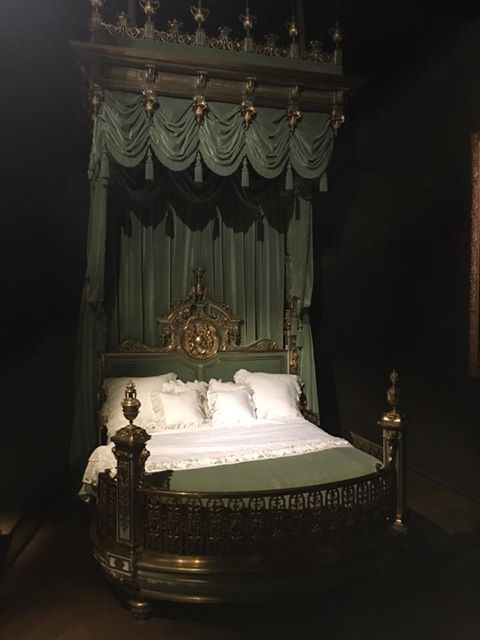
    The bed of one of the great courtesans of 19th century Paris, Valtesse de la Bigne.

    Great bed, eh? Maybe we should call it something like a temple of love. This is the bed of one of the great courtesans of 19th century Paris, Valtesse de la Bigne. Aside from her rich patrons, de la Bigne was the lover of several important artists, including Courbet and Manet, for whom she also modeled. Zola based the title character of Nana on her and described the bed (“a throne, an altar, where Paris came to admire her sovereign nudity” etc) in the novel. In short, it’s an amazing piece of furniture, and you can see it on our Shady Ladies of Paris tour this summer!

    Take Our Metropolitan Museum Tour —> bit.ly/1Sn2DGO

    https://www.facebook.com/events/357210941331932

  • Ernest-Ange Duez’s “Splendeur,” displayed at the Salon of 1874

    Ernest-Ange Duez’s “Splendeur,” displayed at the Salon of 1874

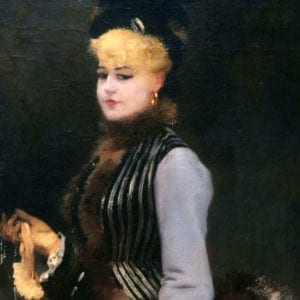
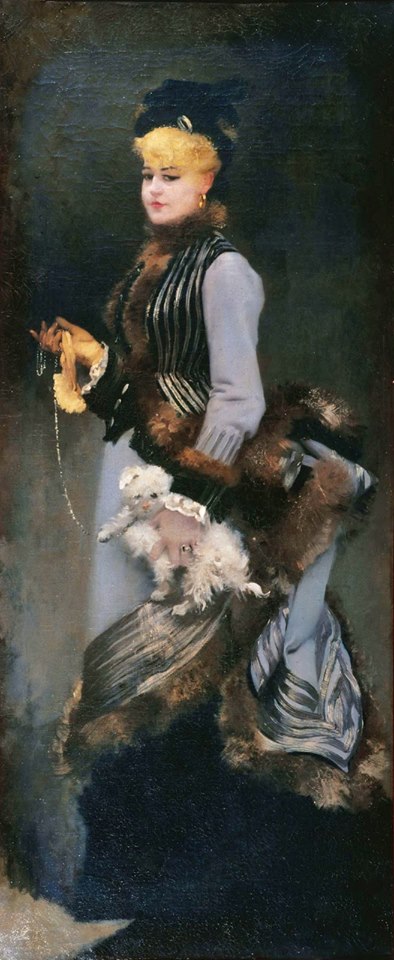
    Here is another thing we will see on our Shady Ladies tour of Paris–one of our favorite images of a courtesan: Ernest-Ange Duez’s “Splendeur,” displayed at the Salon of 1874. It was originally part of a diptych, with “Misère” on the other side, showing the #courtesan in her later years, but “Misère” has disappeared. “Splendeur” portrays a courtesan at the *height* of her career and the height of fashion. The frizzy, unnaturally blonde hair, which might look tacky to us, was the absolute latest craze.

    It was only in the 1870s that people started to be able to completely change their hair color, and women like the Empress Eugénie were the first to try it out. Indeed, the only thing that separates Splendeur from a well-to-do young lady is the fact that she is wearing too many of the latest fashions at once—that and her left eye lazily winking at the viewer….#Paris #Splendeur

    Take Our Tour of The Metropolitan Museum of Art, New York bit.ly/1Sn2DGO

    https://www.facebook.com/events/344441045938392

    Save

  • Courtesans And Royal Mistresses: Madame Du Barry

    Courtesans And Royal Mistresses: Madame Du Barry

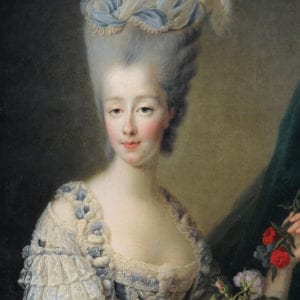
    This is Mme. Du Barry–one of the most famous courtesans and royal mistresses of all time! Du Barry was the last of Louis XV’s official mistresses. Louis (it seems) adored her because she was so beautiful that she revived his flagging sex life. She ended her life on the guillotine, but here she is long before, dressed in the 18th century’s version of ‘casual Friday’: a simple gingham dress and straw hat–a style favored by Marie Antoinette, who famously loathed Mme. Du Barry and the racy side of French court life that she represented. (more…)

  • How our art history tours about courtesans started

    How our art history tours about courtesans started

    People often ask me how I came up with the idea of giving art history tours about courtesans. There is a short version of that story and a long one. The short one would start with the fact that I have given art history tours of the Metropolitan Museum for a long time. I gave them for students when I was teaching at Columbia and NYU. Last spring I started giving a gay history tour of the Met, which we call “Gay Secrets of the Metropolitan.”  And as I gave it, I started noticing how many paintings of courtesans there are in the museum. (more…)

Check Out Our Upcoming

ZOOM TOURS