Tag: shady ladies

  • Portrait of Pianist Misia Sert

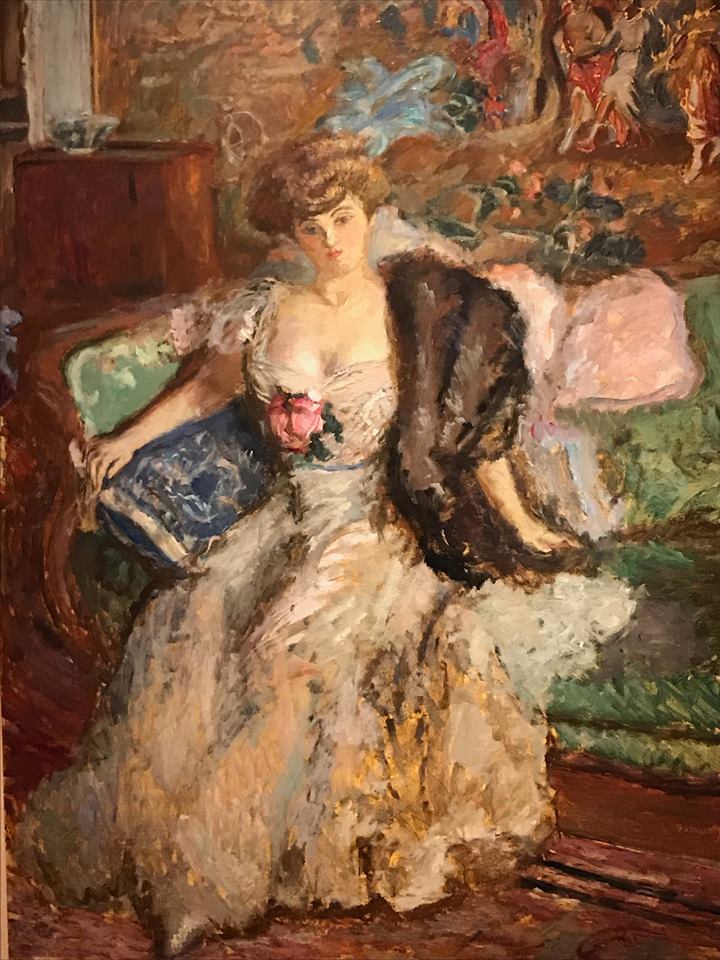
    Portrait of Pianist Misia Sert

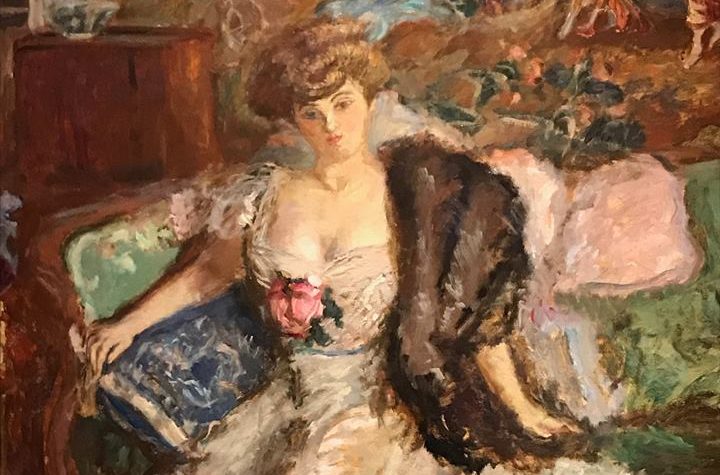
    Misia Sert was an accomplished pianist–a student of Fauré’s, who helped her support herself by referring students to her, she also famously accompanied Caruso at parties when he sang Neapolitan songs.

    But she was most famous as a salonnière, one of the women who ran Paris’ artistic and literary worlds from the 17th through the mid-20th centuries. And in this case, what a salon she had. Over her lifetime, regular attendees included Proust, Gide, Monet, Renoir, Toulouse-Lautrec, Bonnard, Débussy, Ravel, Satie. Ravel dedicated pieces to her, and many of the painters did portraits of her, such as this one by Bonnard. Oh, and she was especially close friends with Diaghilev (of the Ballets Russes) and Coco Chanel!

  • The feminist concept of the “male gaze”

    The feminist concept of the “male gaze”

    The feminist concept of the “male gaze” is useful in art criticism. The concept originally comes from film studies, where it is used to discuss the fact that men traditionally controlled the camera, of which women were an object. Men certainly also controlled the brush through most of the history of Western painting, and the women in paintings generally acknowledge this. As the art historian John Berger said, women in painting don’t usually look out at the viewer: they aren’t considering the viewer, but considering how the viewer sees them. They have an inward gaze, rather than an outward gaze. But painters can also violate this “rule” (more a tendency really) to depict a woman who has power or confidence.

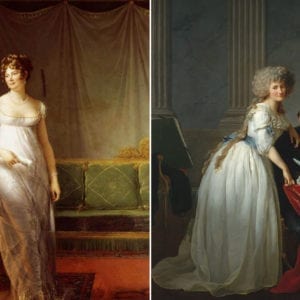
    Two paintings that are diagonally across from each other at the Metropolitan Museum make this clear. On the one hand, we have Gérard’s portrait of the Princess of Talleyrand, a courtesan who became Talleyrand’s mistress and then his wife. She was considered very beautiful in her time and is dressed in the latest Empire fashions, and she looks down and to the side in her portrait. Her gaze avoids the viewer’s: she is absorbed in her own thoughts, or her own coquetry, it’s unclear which. Across the gallery is David’s double portrait of the great scientist Lavoisier and his wife, Marie-Anne Paulze. Here the male inside the painting definitely does not control the gaze: he looks up at his wife questioningly, while she does not return his gaze (though she puts her hand on his shoulder with a gesture of intimacy unusual in painting). Instead she turns to look out directly and confidently (though not aggressively) at the viewer: it is she who communicates with the world on behalf of this couple. And in fact this portrays something real about this couple. Paulze had many public-facing characteristics that Lavoisier lacked: she spoke many languages and could inform Lavoisier about the scientific literature of the whole of Europe. And she was also his lab illustrator, explaining his/their experiments to the world through the visual arts. Look at the women you see in the art museum the next time you go. Do they look out at the viewer, or not, and why?

    https://www.facebook.com/events/724999504353889
  • Shady Ladies Featured In O, The Oprah Magazine!

    Shady Ladies Featured In O, The Oprah Magazine!

    We are so grateful for being included on the ‘Gratitude Meter5 Things We’re Smiling About in this month’s issue of O, The Oprah Magazine! When it comes to Shady Ladies Tours, Oprah exemplifies the kind of ambitious, glass ceiling breaking woman that our tours are all about! (more…)

  • Meet Lady Emma Hamilton A Woman Of Great Beauty

    Meet Lady Emma Hamilton A Woman Of Great Beauty

    Emma Hamilton The way from social obscurity to social stardom has traditionally been even narrower than the strait gate and narrow way to salvation. However, iconic looks, talent, intelligence, and a heaping helping of golden luck have been known to buy one’s way out and up.

    Emma Hamilton was born in 1765, among the working poor. Ordinarily, the nearest such a girl would have come to the aristocracy would have been cleaning up after them. She was working as a servant in London at twelve; she moved on to a brothel, then an establishment known as the Temple of Health and Hymen. Her first protector was one Sir Harry Featherstonebaugh. Supposedly she helped entertain his companions by dancing naked on his table. She attracted the notice of the Hon. Charles Greville, nephew of Sir William Hamilton. Charmed, Greville commissioned George Romney to paint portraits of her and make the public aware of the iconic face. Romney became quite obsessed with her and produced numerous portraits that convey both the heat of his interest and his subject’s charisma. At nineteen she was also painted by Sir Joshua Reynolds in a characteristic pose: a mischievous, meditative look over her shoulder, right hand delicately fingering her cheek. (more…)

  • Yoshiwara, the ‘pleasure quarter’ of the city of Edo

    Yoshiwara, the ‘pleasure quarter’ of the city of Edo

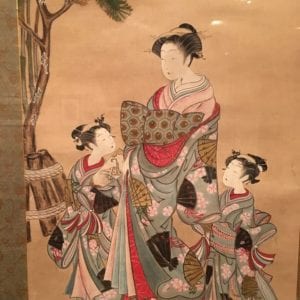
    A couple of weeks ago I took a meander around the Met to see what new stuff was hanging–and what did I find? Lots of new courtesans! In particular, there is now a whole gallery of Japanese paintings of beautiful women–including a number of courtesans, such as this woman in a scroll from the 1780s by Isoda Koryusai. This painting seems to show the main street of the Yoshiwara, the ‘pleasure quarter’ of the city of Edo (modern Tokyo). A courtesan is promenading with her two assistants (or perhaps apprentices). She is the height of fashion, or perhaps overdone—as was apparently typical of these women—wearing multiple layers of elaborate kimonos, and the huge clogs which were typical of courtesans–clogs which made it impossible to walk naturally (a custom that reminds me of Chinese foot-binding). (more…)

  • Sammu Ramat Empress Regnant Assyria

    Sammu Ramat Empress Regnant Assyria

    In Rossini’s opera about her, Queen Semiramide of Assyria walks onstage right into a problem: The aristocratic politician who helped her poison her husband and usurp his throne wants her to fulfill her end of the bargain and nominate him to rule the nation. Payment due! (more…)

  • Meet Nell Gwyn One Of History’s Most Famous Mistresses

    Meet Nell Gwyn One Of History’s Most Famous Mistresses

    Nell Gwynn was born Eleanor Gwynn in 1650, in London and lived a meteoric thirty-seven years. Her mother ran a brothel, where young Nell tended bar until she was fourteen. Then she began selling oranges at the Drury Lane Theatre. Influential attention began before long; the leading actor there, Charles Hart, took the impish nymphet as his mistress and arranged for her to appear as an actress. She probably made her debut at 15. Despite illiteracy, she developed her talents as a thespian, singer, and dancer; she became the theatre’s leading comedienne and fulfilled that role to high acclaim until 1669. During this interval, she also enjoyed a liaison with the sixth earl of Dorset. (more…)

  • Elizabeth I Of Russia

    Elizabeth I Of Russia

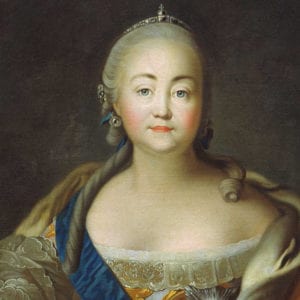
    Elizabeth I of Russia was born in 1709 to Tsar Peter I, whom we know as Peter the Great, and his plebeian consort, Martha Skavronskaya, before their marriage. She inherited her father’s large frame and dark, striking looks, also his charisma and ability to influence people. She grew up in Saint Petersburg in the splendor of her father’s court, amidst the exhilarating progress and strife of Tsar Peter’s fast-paced, radical reforms of Russian society. (more…)

  • Marie Duplessis The Lady of the Camellias

    Marie Duplessis The Lady of the Camellias

    Marie Duplessis (1824–1847) led a meteoric life. The girl who grew up to inspire The Lady of the Camellias by Alexandre Dumas and Verdi’s La Traviata began life as no lady, with no camellias and little else. We know that her original name was Alphonsine Plessis and that she was born into an impoverished, violent household in Normandy. (more…)

  • Delacroix’s portrait of George Sand and her most famous lover, Frederic Chopin

    Delacroix’s portrait of George Sand and her most famous lover, Frederic Chopin

    Delacroix’s portrait of George Sand and her most famous lover, Frederic Chopin, shows her sensual grace and the sensual tenderness between the two. Sand, born Aurore Dupin in 1804, helped put the free in freethinker. Daughter of an aristocrat and a proletarian Parisienne, Aurore was raised by her aristocratic grandmother, a well-meaning despot, at the family estate, Nohant. Aurore inherited two sets of irreconcilable rules, discarded both, and stepped into male privilege—and trousers. (more…)

Check Out Our Upcoming

ZOOM TOURS

BOOK NOW