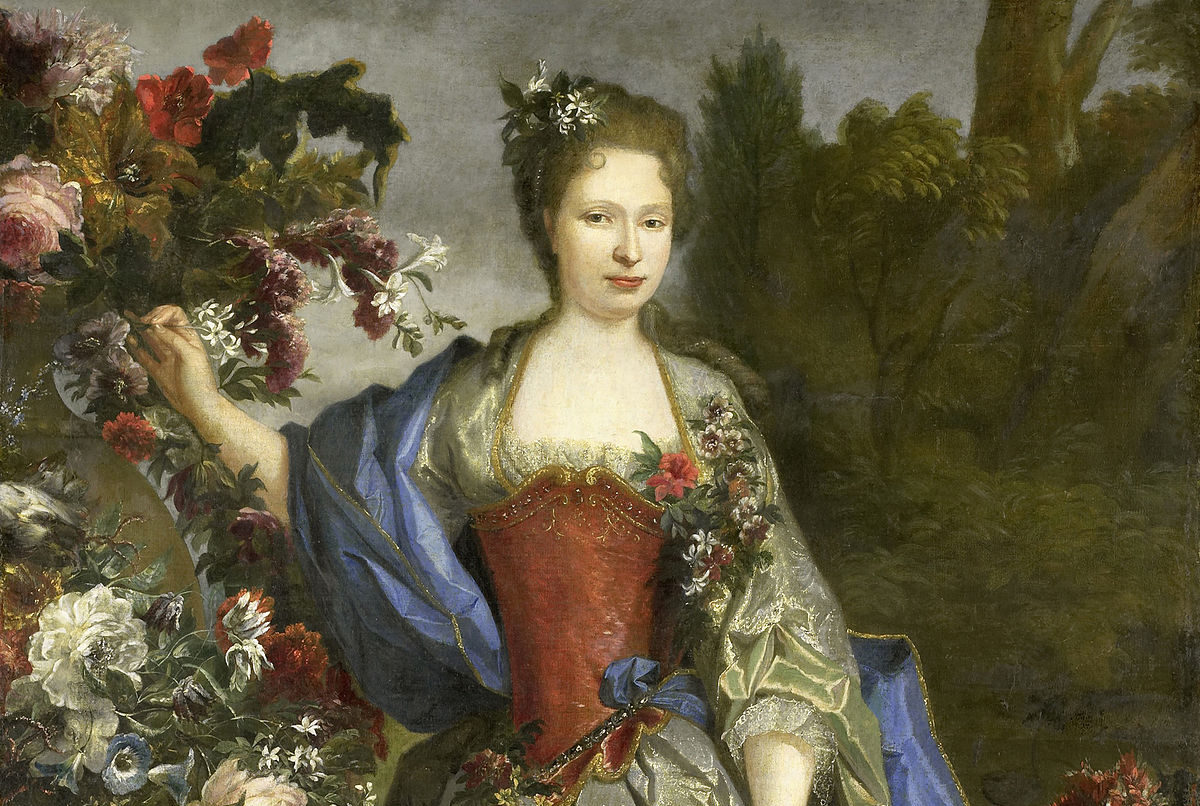
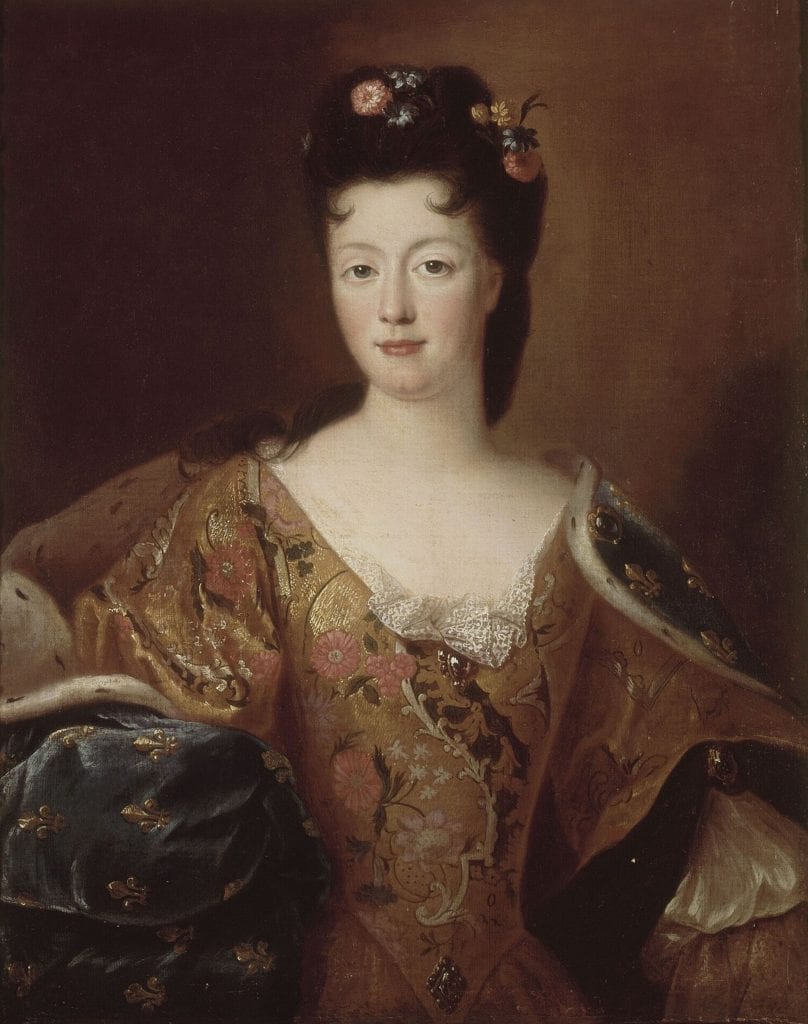
Josephine de Beauharnais (Marie Josèphe Rose Tascher de La Pagerie) 1763-1814 was born to a wealthy family growing sugarcane on the island of Martinique. At 15, a fortune teller predicted she would “become more than a queen.”
When hurricanes destroyed the family plantation, it was arranged that her sister, Catherine-Désirée, be advantageously married to Alexandre Francois Marie, Viscount of Beauharmais. Unfortunately, the girl died. Grasping the opportunity, Josephine would replace her. At 16, she made the dangerous journey to Paris by boat. Alexandre did not find the uneducated, uncultured girl acceptable and was serially unfaithful, once abandoning her and the (two) children for an entire year. (They were married for eight years.)
Josephine went to court, became legally separated – and, surprisingly – eventually divorced. At the Viscount’s expense, she and her daughter moved to Pentement Abbey, a refuge for upper class women. (Her son was sent to boarding school.) Apparently innately sweet, she endeared herself to nobles who taught her to be a lady, or as de Belleville says, “the art of life.” After that, the young woman moved to the home of her father-in-law at Fontainebleau, in sight of an estate she would eventually get to know well.
During the 1794 Reign of Terror, the Viscount was guillotined and Josephine incarcerated for some months due to association. Every morning, a soldier would read a list of those to be executed that day. One story has it that she and her ex were imprisoned together (unlikely) and that he stepped forward when only the name Beauharmais was read – without specificity.
Josephine secured her ex-husband’s possessions when freed and, with the help of Madame Tallien with whom she’d been confined, was made welcome in a vibrant social circle. De Belleville equates this period with the flapper era in America – sexually liberated and partying. She was slim and elegant, but had bad teeth, so smiled rarely. Several strategic affairs with political figures followed. It was at one of these gatherings that 33 year-old Josephine met 27 year-old Napoleon Bonaparte.
Based in part on a Shady Ladies lecture by Edith de Beauville and historian Professor Andrew Lear
George Sand (born Amantine Lucile Aurore Dupin-1804-1876), was one of the most popular writers of her era, respected and befriended by peers Honoré de Balzac, Victor Hugo, Gustave Flaubert, Ivan Turgenev, and Alfred de Musset (with whom she had an affair prior to Frédéric Chopin). Sand lived with extraordinary personal and professional freedom at a time women were bound to their homes and husbands by both society and Napoleonic law.
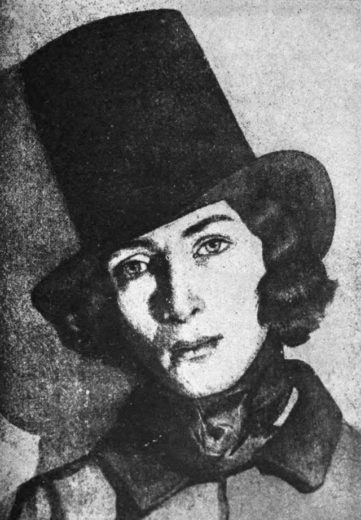
Portrait of George Sand en costume mascilun (Public Domain)
Aurore’s father died when she was four. Her mother, apparently mentally unbalanced, turned the child over to a grandmother who raised her. In order to escape being placed in a convent, at 18 she married Francois Casimir Dudevant and would bear him two children, Solange and Maurice. The marriage was a disaster, her husband an unfaithful bully.
A year later her grandmother died. In France at the time, one had to be 21 to achieve legal adulthood, but the girl managed to keep both house and inheritance without interference. Monsieur Dudevant lost no time in spending her money. As divorce had been outlawed, Aurore picked up and moved to Paris on her newfound funds, arranging six months with and without custody of the children. Both these exertions of women’s rights were unheard of. Four years later, she would be the first woman in France to achieve legal separation.
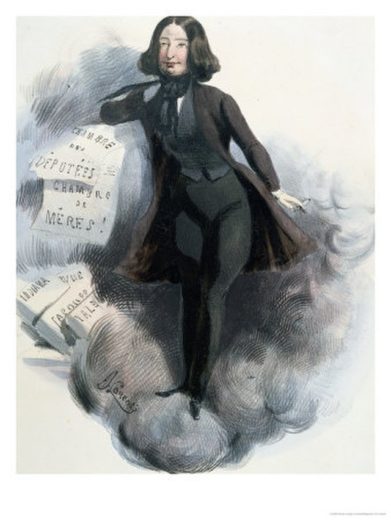
Caricature George Sand 1848 (Axagore; Creative Commons Attribution Share Alike)
Restrictions on women were nonetheless omnipresent. In order to move freely (and, she said, for both convenience and protection), Aurore began to dress as a man, a choice outlawed by police unless one was riding or had a doctor’s note. (Consequences of ignoring the law, however, were few and far between.) Victor Hugo commented, “George Sand cannot determine whether she is male or female. I entertain a high regard for all my colleagues, but it is not my place to decide whether she is my sister or my brother.”She also scandalously smoked in public.
Aurore’s first book Rose et Blanche was a collaboration with writer Jules Sandeau (another affair). Its author was listed as “Jules Sand.” The second volume, Indiana, written alone, came out under the nom de plume George Sand. It centers on a young married noblewoman who suffers sequential illness presumably due to lack of passion. Seduction, adultery, life on an island (shades of things to come) and a suicide pact which is thwarted by love make this a perfect romance novel. Women were drawn not only to that aspect, but also its spirited female independence. Her reputation was made.
A series of affairs ran tandem with prolific writing. Sand’s last known relationship was with her son’s best friend 15 years her junior. It lasted 15 years until her death. She died at 72 and is buried behind the chapel at Nohant.
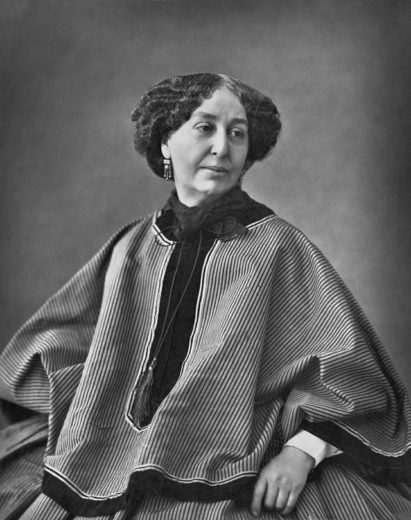
George Sand by Nadar 1864 (Public Domain)
1836, the first of several compendia was published in 24 volumes. This included literary criticism, political texts (She was a member of the provisional government of 1848 and wrote about the Paris Commune of 1871) and autobiographical pieces Histoire de ma vie (1855), Elle et Lui (1859, about her affair with Musset), and Un Hiver a Marjorque (about her life in Majorca with Chopin). In 1880, her children sold the rights to her literary estate for 25,000 Francs. Still, she may be better known for her lifestyle.
Born in Warsaw, Poland, Frédéric François Chopin (1810-1849) began playing piano at age six. A year later, running just behind Mozart’s year-old accomplishment, he wrote and performed his first compositions, the polonaises in G minor and B flat major. His piano teacher saw to it the prodigy attended music school and at a young age Chopin began giving concerts.
At 20, as his country erupted in war, he moved to Paris.The pianist/composer would offer only 30 public performances in his life. Those privileged to hear him live attended private salons. Income was garnered by giving piano lessons and selling compositions. Otherwise affianced for a single year (history suggests the two were never lovers), the sickly Chopin (like his sister he would die of tuberculosis) is not associated with another woman besides George Sand.
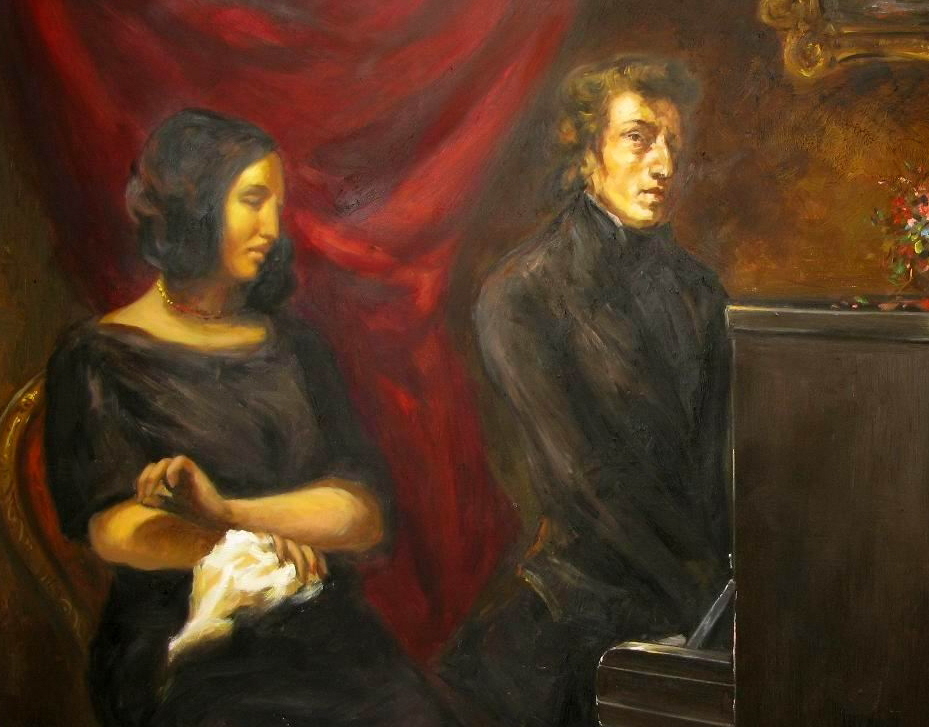
When Chopin met Sand, they were both respectively staying at the house of mutual friend, Franz Liszt. According to de Belleville, the author was in her usual male attire. “What an unattractive person la Sand is. Is she really a woman?” Chopin commented. (Jim Samson on Chopin – Oxford University Press) The musician was conservative and a snob. The writer, in turn, initially found her incipient lover frail and rather feminine. A year later, setting her cap for the younger man (all her lovers were younger), Sand wore the finery of her sex and seduced him.
Photo of Frédéric Chopin 1847 (Public Domain)
She was apparently surprised at his effect on her. It’s a testament to Sand’s devotion to the man and his art that she financially supported and nursed the increasingly ill Chopin for nine years, long after they stopped having sex. Madame was still married. In order to escape prying eyes, she took Chopin to Majorca (with her children) even importing a superb Pleyel piano.
Their ill-timed, under researched stay was doomed. It was winter. Living conditions were harsh exacerbating instead of helping Chopin’s illness. Catholic locals banded together against the unmarried couple (who didn’t attend church) and overcharged for everything. Sand’s funds ran thin. Chopin coughed up blood. They began to fight. (The couple couldn’t leave because sailing was dangerous during the season.) Despite all this, under her care, 24 preludes were composed.
Fryderyk Chopin 1892 (Public Domain)
Finally able to travel, the two went to Barcelona, Marseilles and finally Sand’s home in France, Nohant. The music room was lined in cork so creativity wouldn’t be hampered by sound. Sand now called Chopin her “third child.” She published the novel Lucrezia Floriani, whose main characters – a rich actress and a prince in weak health – could be stand-ins for the couple.
At this point, her daughter Solange married a man De Belleville describes as mercenary. George had a falling out with her while Chopin evidently took the girl’s side. It tipped the balance and the composer left. He made his last appearance at London’s Guildhall in a benefit for Polish refugees and died a year later at age 39. Frédéric Chopin is buried in Paris’s famous Père-Lachaise Cemetery. Over 230 works of music survive.
Opening: George Sand and Frederic Chopin by Eugene Delacroix- (Public Domain)
Films: Impromptu, George Sand’s meeting with Chopin- Prime video
Paris is the great city for the history of racy women. Certainly, other places have contributed—particularly Italy during the Renaissance. But from the time the Renaissance took off in France, scandalous French women have taken most of the world prizes for raciness. (more…)
The world’s museums are full of scandals and secrets. John Singer Sargent’s portrait of Virginie Amélie Avegno Gautreau, known simply as Madame X, is a great example. When it
was unveiled at the 1884 Paris Salon, it caused such a scandal that Sargent’s career was almost destroyed. Who after all would want to hire a portrait-painter who caused scandals at the Salon? It was also damaging, of course, for Gautreau’s reputation as a society beauty. Her family begged Sargent to withdraw the painting from the Salon, but he refused. After the Salon, however, he repainted the detail that had caused the biggest scandal. (more…)
It seems unbelievably dated, but people are still calling ambitious, intelligent women “nasty women.” As if that could hurt anyone’s feelings in 2020! In fact, like many other outdated insults, it has the opposite effect. Many women today are are taking the term on (as lesbians took on the term ‘dyke’) and calling themselves “nasty women” in sarcastic protest. (more…)
Imperia Cognati (also called Imperia La Divina, meaning Imperia The Divine, or The Queen of Courtesans, 3 August 1486 – 15 August 1512), was a Roman courtesan. She has been considered the first celebrity of the class of courtesans, which was created in Rome in the late 15th century. (more…)
One of the fun things to look at in the Metropolitan museum is the way artists portray women’s breasts—because while you might imagine that the modern obsession with large breasts is universal, in fact ideal breasts vary from cultural moment to cultural moment. In particular, it is pretty clear that the Renaissance favored small breasts. The corsets in fashion at that time created an upper body shape similar to the shape of a man’s chest in armor. It seems the women’s corsets squashed their breasts out sideways to create this effect. And Renaissance nudes’ breasts are influenced by the way women looked when clothed: their breasts are not large, sit low on the chest, and are quite far apart. In the 18th and 19th centuries, by contrast, women’s breasts reflect a different kind of corset: they are larger, higher, and closer together.
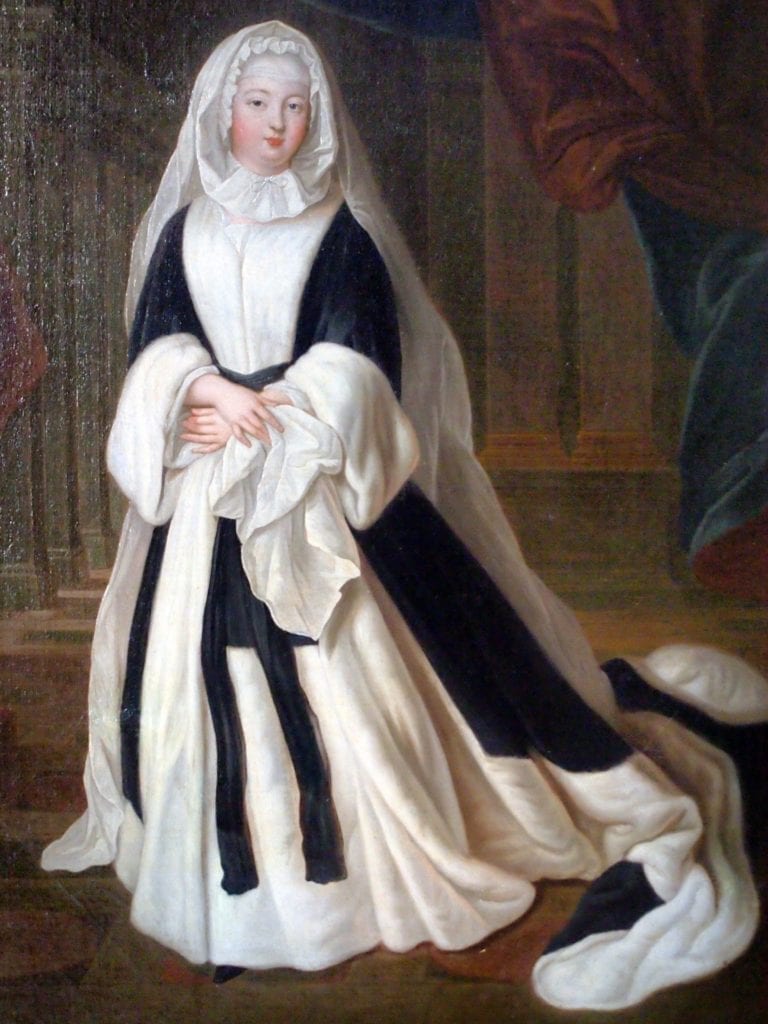
The scandalous Duchess of Berry was born as Marie Louise Élisabeth d’Orleans on 20 August 1695 at the Palace of Versailles to Philippe II, Duke of Orléans and Françoise-Marie de Bourbon, who was a legitimized daughter of Louis XIV of France.
She was near death several times in her young life. At the age of six, she suffered a near-fatal illness, and her father himself nursed her day and night to save her. At the age of ten, she caught smallpox, and she was presumed dead for over six hours.
At the age of 15, it was decided that she should marry Charles, Duke of Berry, who was the youngest son of the Grand Dauphin. The marriage took place on 6 July 1710 at the Palace of Versailles. The following year the new Duchess of Berry gave birth at the Palace of Fontainebleau to a baby girl. She lived for only two days. This death was blamed on the King who had made the Duchess travel with the court to the Palace of Fontainebleau. The barge the Duchesss was traveling in hit a pier and nearly sank. Apparently, the Duchess almost died.
On 26 March 1713, she gave birth to her second child, a son. He was given the title Duke of Alençon, but he died just three months later after an attack of convulsions.
By the end of that year, rumours flew around that the Duke of Berry had taken a mistress and in turn, the Duchess also took a lover.
When it became public knowledge, the Duke threatened to send her to a convent, and it’s even recorded that he kicked her in public.
Apparently she intended to flee with her lover, but fortunately for her, her husband died suddenly on 5 May 1714 after a hunting accident. She was pregnant at the time, either by her husband or her lover. She gave birth on 16 June 1714 to a daughter who died the next day.
By 1716 the Dowager Duchess was known for her balls. She claimed to be ill that year, officially with a bad cold. She gave birth to a girl, who only lived for three days.
If she intended to keep this pregnancy a secret she had no luck, as it was soon public knowledge and ridiculed.
Another pregnancy was rumored in 1717 as she was hiding in her Château de la Muette. The pregnancy was openly mocked:
Very big with child The fruitful Berry Said in a humble posture Very sorry at heart : Lord, I will no longer have such lusty ways I only want Rions, Sometimes my dad, Here and there, my guards.
Voltaire even wrote a play about the situation and the presence of the Duchess at the premiere added to its success. She was visibly pregnant, suggesting poor judgment! She gave birth to a baby girl in July 1717. This daughter appears to have survived to adulthood. According to one writer she became a nun.
She gave birth to another baby girl on 2 April 1719 after an excruciating labor of four days. The child was stillborn. The father was rumored to be her lieutenant of the guards. She nearly died giving birth, and during the crisis, she was refused absolution and the sacraments unless she removed her lover from the palace. After the crisis was over the Duchess secretly married this lieutenant, Sicaire Antonin Armand Auguste Nicolas d’Aydie, perhaps hoping to lessen the scandal.
Though her health had not fully recovered from the childbirth, she gave a reception in honor of her father. She apparently caught a chill that exacerbated her condition. She died on 21 July 1719, still only 23 years old.
An autopsy revealed that the Duchess was again pregnant. She is buried in the Basilica of Saint-Denis.
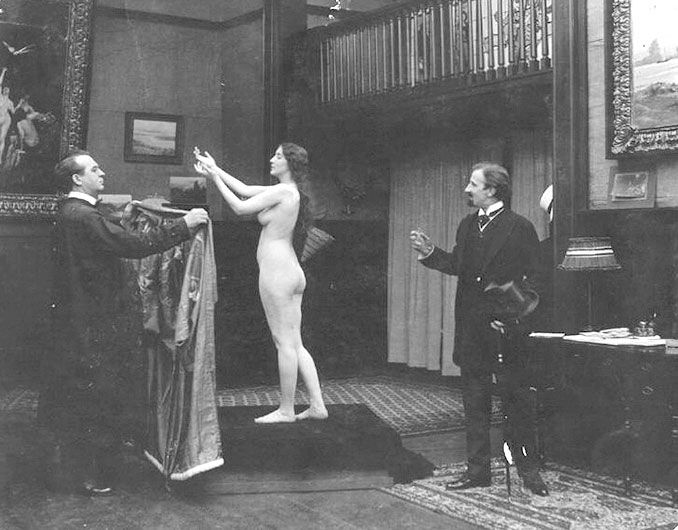
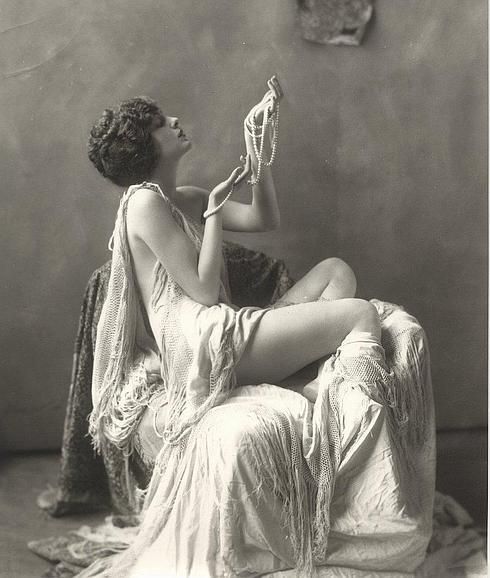
Not many people know Audrey Munson by name—but if you’ve spent any time in New York City, you’ve seen her face. Munson’s likeness tops some of the city’s grandest buildings. Even when she is remembered, it’s often for the more scandalous and tragic events in her life (controversy around her nude modeling; struggles with depression) rather than her essential role in the creative process, and her work as an advocate for the rights of creative women.
Not many people know Audrey Munson by name—but if you’ve spent any time in New York City, you’ve seen her face. Munson’s likeness tops some of the city’s grandest buildings. Even when she is remembered, it’s often for the more scandalous and tragic events in her life (controversy around her nude modeling; struggles with depression) rather than her essential role in the creative process, and her work as an advocate for the rights of creative women.
You can still see the image of Audrey Munson in museums from Hartford to San Francisco.
A statue of her, America’s first supermodel, presides over Sleepy Hollow Cemetery in Concord, Mass. She holds a Bible as Evangeline in the Longfellow Memorial in Cambridge, Mass.
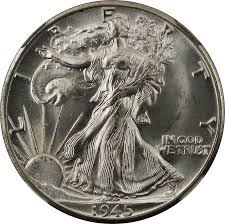
Audrey Munson as Walking Liberty
She was even in mass circulation for decades as the model for the Walking Liberty Half Dollar.
People who saw Audrey Munson everywhere in New York nicknamed her ‘Miss Manhattan.’
Audrey appears atop the Municipal Building, at the entrance to the Manhattan Bridge and on the Pulitzer Fountain in front of the Plaza. source
Misia Sert was an accomplished pianist–a student of Fauré’s, who helped her support herself by referring students to her, she also famously accompanied Caruso at parties when he sang Neapolitan songs.
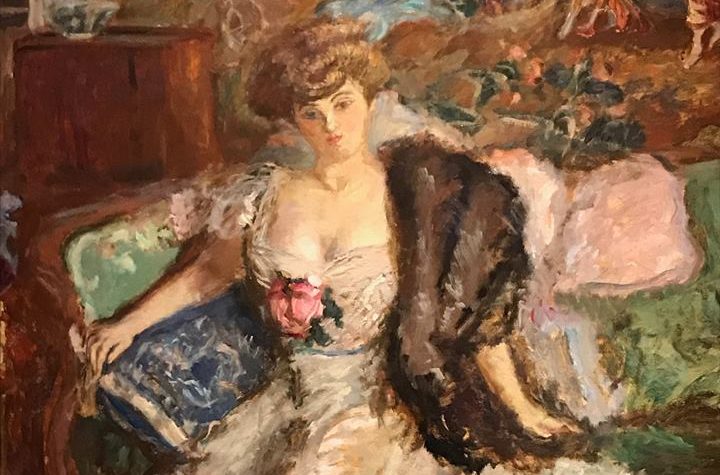
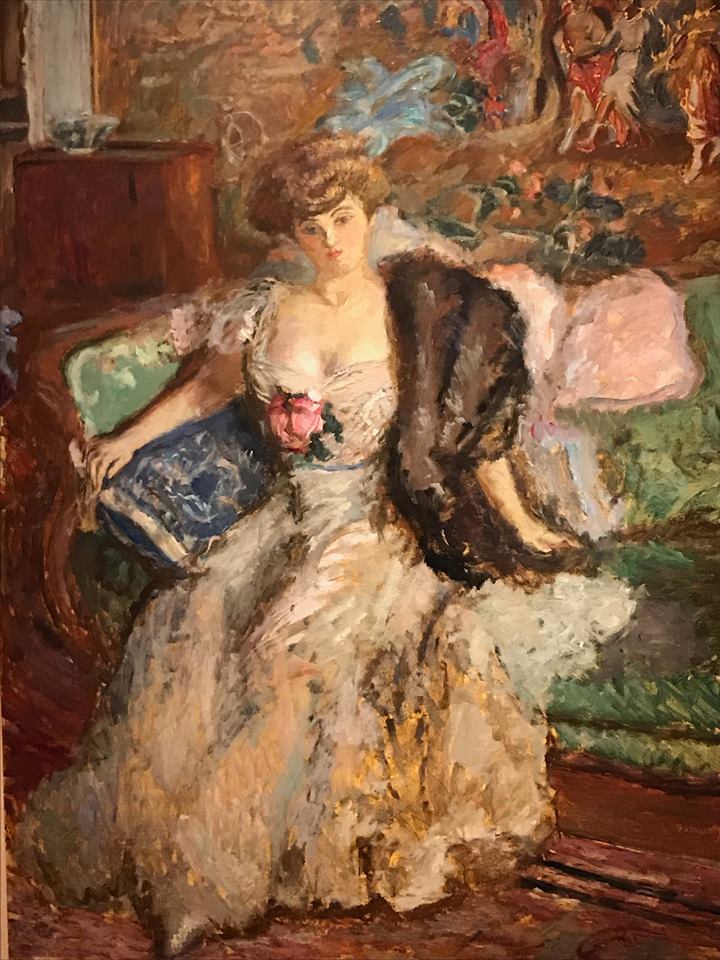
But she was most famous as a salonnière, one of the women who ran Paris’ artistic and literary worlds from the 17th through the mid-20th centuries. And in this case, what a salon she had. Over her lifetime, regular attendees included Proust, Gide, Monet, Renoir, Toulouse-Lautrec, Bonnard, Débussy, Ravel, Satie. Ravel dedicated pieces to her, and many of the painters did portraits of her, such as this one by Bonnard. Oh, and she was especially close friends with Diaghilev (of the Ballets Russes) and Coco Chanel!